
The idea of ditching the alarm clock and the daily grind for a life funded by the thrill of online gambling is a persistent daydream for many. Who wouldn’t fantasize about turning a few strategic bets into a full-time income? But here’s the truth, straight up: while it’s technicallypossible* to make a living from online gambling, it’s an uphill battle filled with more zeros and ones than pure luck. It’s far from the easy street many imagine, and it’s certainly not a path for the faint of heart or the unprepared. As someone who’s navigated this complex landscape, the goal here isn’t to burst your bubble, but to give you an honest, data-driven look at what it really takes to chase an online gambling income. Forget the movies; we’re diving into the gritty reality beyond the wins, and exploring the demanding world of the professional gambler.
The Allure vs. The Astonishing Reality: What the Data Actually Says
The tantalizing prospect of quick riches and effortless wins is often the siren song that draws people to gambling. We see the highlight reels, the viral stories of massive jackpots, and hear the whispers of those who seemingly struck gold. It’s a narrative deeply ingrained in popular culture – the idea that with a bit of luck and a smart bet, financial freedom is just around the corner. This romanticized view, however, often stands in stark contrast to the cold, hard facts presented by actual gambling statistics. While the dream of easy money is powerful, the reality for the vast majority of players is a consistent struggle against the odds, with long-term profits being an elusive goal.
The Dream: Easy Money and the Siren Song of ‘The Big Win’
Picture this: the slot machine whirring, cards being dealt, the cheering crowd. Media and countless anecdotes paint a picture where a single lucky spin or a well-timed bet can change a life overnight. It’s the fantasy of the quick win, the effortless path to financial freedom that fuels the gambling dream, making it an irresistible allure for many seeking a shortcut to prosperity.
The Stark Truth: Most Players Lose
The overwhelming consensus from studies and industry analysis points to a simple, yet often ignored, truth: most gamblers lose money. Research indicates that a staggering 96% of online bettors see net losses over extended periods, with only a tiny fraction experiencing sustained profit. This isn’t due to a lack of skill for most, but rather the fundamental mathematical disadvantage, known as the “house edge,” baked into every casino game and betting platform. This inherent structure ensures that, over time, the house profits from the collective losses of its players.
Skill-Based vs. Chance-Based: Where Your ‘Income’ Actually Lies
When it comes to gambling, the idea of turning a pastime into a reliable income stream is, frankly, a bit of a mirage for most. The crucial distinction lies between skill-based gambling and chance-based gambling. In one corner, you have games where your decisions, strategy, and understanding have a tangible impact on the outcome – think poker, blackjack, and sports betting. In the other, you have games where your fate is entirely in the hands of random chance, like slot machines or roulette. If you’re genuinely looking at gambling as a potential source of funds, or even just a way to minimize losses, focusing on the skill-based arena is your only plausible path. I’ve seen players meticulously analyze sports data for hours, diving deep into team statistics, player injuries, and historical performance – that’s the dedication required. Then, you see others spinning slot machines, hoping for a miracle with every pull, a fundamentally different approach. The latter is pure entertainment; the former, while still incredibly difficult, at least offers a theoretical pathway. The house always wins in pure chance games. It’s how they stay in business. The only ‘income’ you’ll find there is the fleeting thrill of a win, not a consistent return.
Games of Pure Chance: The Casino’s Built-in Advantage
These games are designed with a mathematical certainty of profit for the operator, known as the house edge explained. Think of it like a tiny tax on every bet placed. Slots, for example, have a ‘Return to Player’ (RTP) percentage, and while a high RTP (say, 97%) means 97% of wagered money is theoretically returned to players over an extended period, the remaining 3% is the casino’s guaranteed profit. Roulette offers similar mathematical certainty. The roulette odds are structured so that even seemingly even-money bets have a slight disadvantage for the player due to the presence of the zero (or double zero). Over millions of spins, this built-in advantage ensures the casino’s profitability without any need for player skill.
The Skill Edge: Poker, Blackjack, and Strategic Betting
Here’s where a glimmer of ‘income’ potential, or at least significant loss mitigation, enters the picture. In poker, you’re playing against other players, not the house directly, and your ability to read opponents, calculate odds, and employ strategy is paramount. A skilled blackjack player can leverage basic strategy and potentially card counting to gain a very small ‘edge.’ Sports betting analysis, when done correctly, involves finding ‘value’ where the odds offered don’t accurately reflect the true probability of an event. This is known as advantage play gambling. Becoming a professional poker player or a consistent winner in sports betting requires immense dedication, continuous learning, and significant bankroll management. I once spoke with a player who spent an entire weekend analyzing obscure football stats for a single bet – that’s the level of commitment. It’s not about luck; it’s about relentless dedication to finding those tiny edges.
The Professional Gambler’s Toolkit: Beyond Luck
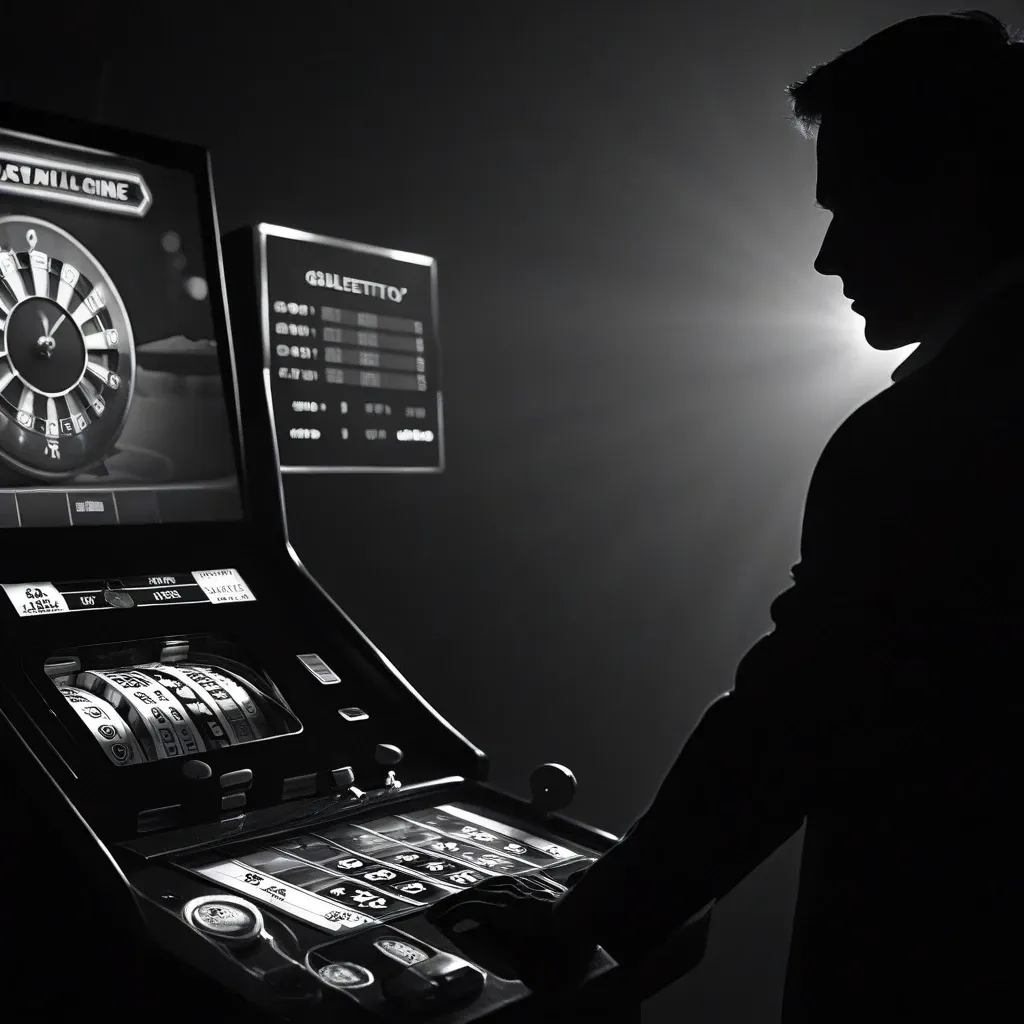
To even think about professional gambling, you need far more than a lucky streak. It’s a demanding profession requiring a specific blend of skills, knowledge, and unwavering discipline. This isn’t about hoping for the best; it’s about meticulous preparation and execution, day in and day out. The journey involves cultivating a deep understanding of the games you play, often bordering on academic expertise. Advanced strategy development is non-negotiable, transforming intuitive guesses into calculated plays. Analytical prowess is crucial – whether it’s dissecting data for sports betting or precisely calculating odds, you need to interpret information effectively. Beyond the technical aspects, the mental game is paramount. Psychological resilience is key to handling the inevitable swings of fortune, maintaining discipline through thick and thin, and committing to a path of continuous learning. It’s a lifestyle, not a hobby, demanding constant refinement and adaptation.
Mathematical Mastery: Understanding Odds, Variance, and Probabilities
At the core of any successful gambling endeavor lies a firm grasp of the mathematics. You’ve got to understand odds, probabilities, and especially, variance. Variance is that wild beast that can make or break your short-term results – it represents the natural fluctuation of outcomes. Even with a positive expected value (EV), meaning over the long haul you’re expected to win, you can face weeks, even months, of agonizing losses. I’ve learned to ride those waves, knowing that the math is on my side, even when the immediate results suggest otherwise. Standard deviation plays into this, too, showing just how much your results might deviate from that positive EV. It’s about managing expectations and understanding that the game isn’t always “fair” day-to-day, but it is fair over a sufficient sample size if your strategy is sound.
Strategic Depth: Developing and Executing Winning Play
Strategy in professional gambling isn’t just a gut feeling; it’s a carefully constructed playbook. For poker players, this means understanding the difference between playing optimally against an unknown field (Game Theory Optimal or GTO) versus exploiting the specific weaknesses of your opponents. In sports betting, it’s about more than just picking winners; it’s about ‘line shopping’ to find the best odds and identifying genuine value where the market might be mistaken. My playbook for blackjack, for instance, took years to refine, incorporating complex card-counting techniques and optimal strategy adjustments. And I can tell you, I constantly update it based on new trends, rule changes, and evolving opponent tendencies. It’s a living document, not a static set of rules.
Psychological Fortitude: The Mind Game of Professional Gambling
The most brutal opponent a professional gambler faces often isn’t across the table or on the field, but within their own mind. We call it ’tilt’ – that emotional frustration that triggers rash decisions and turns a winning hand into a losing one. Managing stress, avoiding burnout, and maintaining objectivity are not just helpful; they’re survival skills. I remember going through a brutal seven-week losing streak last year. Every instinct screamed to chase losses, to throw caution to the wind. But discipline kicked in. I stuck to my bankroll management, refused to deviate from my pre-determined betting limits, and focused on playing my A-game with every wager, even when I was down. It was a brutal period, but by maintaining that psychological control, I weathered the storm and came out stronger on the other side, ready for the next profitable opportunity.
The Financial Backbone: Bankroll Management is Non-Negotiable
Listen, in the wild world of gambling, where luck can be a fickle friend and skill a long-term ally, there’s one constant you absolutely cannot ignore: bankroll management. This isn’t just a suggestion; it’s the bedrock of survival and the secret sauce for any shot at long-term success. Without a solid plan for your gambling capital, even the most brilliant strategies can go up in smoke. Variance is real, and it hits hard. Your carefully crafted staking plan needs to be robust enough to absorb those inevitable losing streaks, allowing your true skills to shine through rather than being extinguished by a bad run. For games with high variance, like slots or certain tournament formats, sticking to a strict 1-2% of your bankroll per bet or session is usually the play. For lower variance situations, like some sports betting markets, you might get away with 5%. The amount of risk management gambling you implement directly dictates your longevity. Different games, you see, demand different levels of protection. Trying to make a living from poker with the same bankroll a casual blackjack player uses? That’s just asking for trouble.
Defining Your Bankroll: What You CanActually* Afford to Lose
This is where many folks stumble. Your bankroll isn’t your savings account or the money you’ve earmarked for bills. It’s pure risk capital – money you can genuinely afford to watch disappear without it messing with your rent, your food budget, or your peace of mind. Betting with money you need for rent isn’t a strategy; it’s a fast track to desperation. Think of it as your “entertainment fund” that you’re hoping to grow, but it must be disposable.
Staking Plans: How Much to Wager Per Session/Bet
Now, how much do you actually put on the line? That’s where staking plans come in. You’ve got flat staking, where you bet the same amount every time – simple, disciplined. Then there’s percentage staking, which adjusts your bet size with your bankroll, scaling up wins and down losses automatically. For those with a proven edge, the Kelly Criterion basics offer a mathematical edge, but tread carefully; overestimating your edge here is a quick way to disaster. These plans are your shield against the brutal swings. You have to stick to them, even when that “sure thing” feels like it’s begging you to double down.
Capital Requirements: How Much is ‘Enough’?
Let’s talk numbers. The hobbyist might be fine with a few hundred bucks. But if you’re eyeing professional gambling for a livable income, the capital requirements explode. Earning a modest five-figure annual income from poker, for example, might mean needing a bankroll in the tens of thousands, easily. High-variance games or aiming for a significant income relative to your bankroll size always demands more. That’s the reality of turning risk capital into a sustainable income stream; it requires a substantial cushion to weather the storms and allow your skills to generate consistent returns.

The Risks and Downsides: Why Most Fall Short
Dive into the gritty reality of professional gambling – it’s a path fraught with challenges that go far beyond the perceived glamour. While the allure of freedom and big wins is strong, the truth is that for most, this pursuit ends in disappointment or worse. The immense time commitment, often exceeding a standard 9-to-5, is just the beginning. The psychological strain is immense, leading to isolation and a constant battle against an unforgiving landscape of competition, evolving platforms, and the ever-present specter of variance. Regulatory shifts can drastically alter the game overnight, and for many, the line between a profession and a devastating compulsion blurs. A stark warning is necessary: the urge to “chase losses” is a siren song leading directly to burnout and the very real danger of gambling addiction. If the thrill of the game morphs into a desperate need, recognizing the signs of problem gambling and seeking professional help is not a weakness, but a critical step towards recovery.
The Time Sink: It’s a Full-Time Job (and Then Some)
Forget the idea of professional gambling as a leisurely pursuit. My ‘work’ often involved 10-12 hour days, analyzing data long after the games were over. This isn’t just playing slots or hitting the roulette wheel; it’s rigorous research, strategy refinement, meticulous session reviews, and staying acutely aware of every market shift or platform change. The grind is relentless, demanding far more dedication than many imagine when they picture someone ‘playing for a living,’ making the gambling time commitment a significant factor few truly prepare for.
Chasing Losses & The Slippery Slope to Addiction
The psychological trap of chasing losses is a brutal reality for many aspiring professional gamblers. It’s the relentless feeling that one more bet will recoup the previous ones, a cycle that spirals downwards with alarming speed. This compulsive behavior is a primary indicator of problem gambling. Recognizing when your play has shifted from strategic profession to emotional compulsion is crucial. The signs of gambling addiction can be subtle at first, but they are there. If you find yourself lying about your gambling, gambling to escape problems, or feeling desperate after a losing streak, it’s time to heed the warning. Seeking help isn’t a sign of failure, but a testament to strength and a commitment to regaining control.
Competition and Evolving Landscapes
The arena of professional gambling is fiercely competitive. You’re not just up against casual players; you’re facing other seasoned professionals armed with sophisticated systems and a deep understanding of the odds. Moreover, the digital gambling platforms themselves are in constant flux. What worked five years ago might be obsolete today. Finding profitable edges requires constant adaptation and innovation, making it nearly impossible to rest on past successes. The landscape shifts rapidly, demanding an agility that few possess, turning the pursuit into an exhausting arms race against both human opponents and the evolving nature of the games themselves.
Conclusion: Realistic Expectations and Your Path Forward
So, can you truly make a living as a professional gambler? The short, unvarnished answer is yes, it’spossible*. But let’s be crystal clear: for the overwhelming majority, it’s a remarkably improbable path. The glossy portrayals in media barely touch on the grueling reality of immense skill, unwavering discipline, a substantial capital investment, and a psychological fortitude most people simply don’t possess or can’t cultivate. For the vast majority, think of gambling not as a career, but as a form of entertainment, perhaps a very controlled side hustle at best, where losses are expected and wins are a bonus.
The Verdict: Possible, But Highly Improbable for Most
The pursuit of professional gambling as a primary income source is intensely challenging. Success demands an edge derived from deep analytical skill, not just luck.
Your Honest Self-Assessment: Is This Path For You?
Before diving headfirst, take a brutal inventory. Can you genuinely weather months of consecutive losses without unraveling? Do you have the ironclad discipline to adhere to a rigid plan, even when your gut screams otherwise? Is your financial situation robust enough to withstand significant, prolonged downturns without impacting your daily life? This isn’t a hobby; it’s a demanding enterprise requiring a specific mindset and unwavering commitment. Many find that their risk tolerance and inherent discipline aren’t suited for this high-stakes arena.
Responsible Engagement: Beyond Professional Ambitions
For almost everyone, focusing on responsible engagement is the wisest route. Set strict limits on both time and money – and stick to them religiously. Even for entertainment, understand your chosen game’s mechanics and manage your bankroll as if your livelihood depended on it. Know your triggers; recognize the subtle shift from calculated risk to emotional decision-making, and have a clear exit strategy. Ultimately, the greatest “win” is knowing when to walk away, ensuring that your engagement remains a source of amusement, not a path to financial distress.